What Is Longevity Medicine? Understanding Biological Aging and How to Slow It
What Is Longevity Medicine?
As we grow older, we naturally begin to ask important questions:
How long can we live? For how long can we maintain good health? Can we prevent chronic diseases associated with aging? Is it possible to achieve healthy aging and longevity?
Aging is both inexorable and unavoidable. I personally see aging as a gift of life prolongation—because only death can stop the chronological aging process. In that sense, aging is a privilege reserved for those who live long enough to experience it.
What we cannot change is the passage of time. What we can potentially influence and control is the rate at which aging-related changes occur in our bodies. This is known as biological age.
Biological age depends on many different factors. Some are genetic, determined by our inherited DNA. Others are epigenetic, meaning they are shaped by our environment and lifestyle choices. Diet, physical activity, sleep quality, alcohol intake, smoking, stress, and toxic exposure all influence how fast or how slow we biologically age.
Some factors can positively affect biological aging—such as good nutrition, regular physical activity, restorative sleep, and stress management. Others accelerate the aging process, including smoking, excessive alcohol consumption, sedentary behavior, chronic stress, and exposure to environmental toxins.
Although genetics play a role in our predisposition to develop—or avoid—certain diseases that can impact longevity, epigenetic factors are the most important determinants of the aging process. They also represent the area where we have the greatest ability to intervene, through lifestyle modification and, when appropriate, medical interventions such as targeted nutrition, supplements, and certain medications known as geroprotectors—agents that help protect against aging-related damage.
The Biology of Aging: A Brief Overview
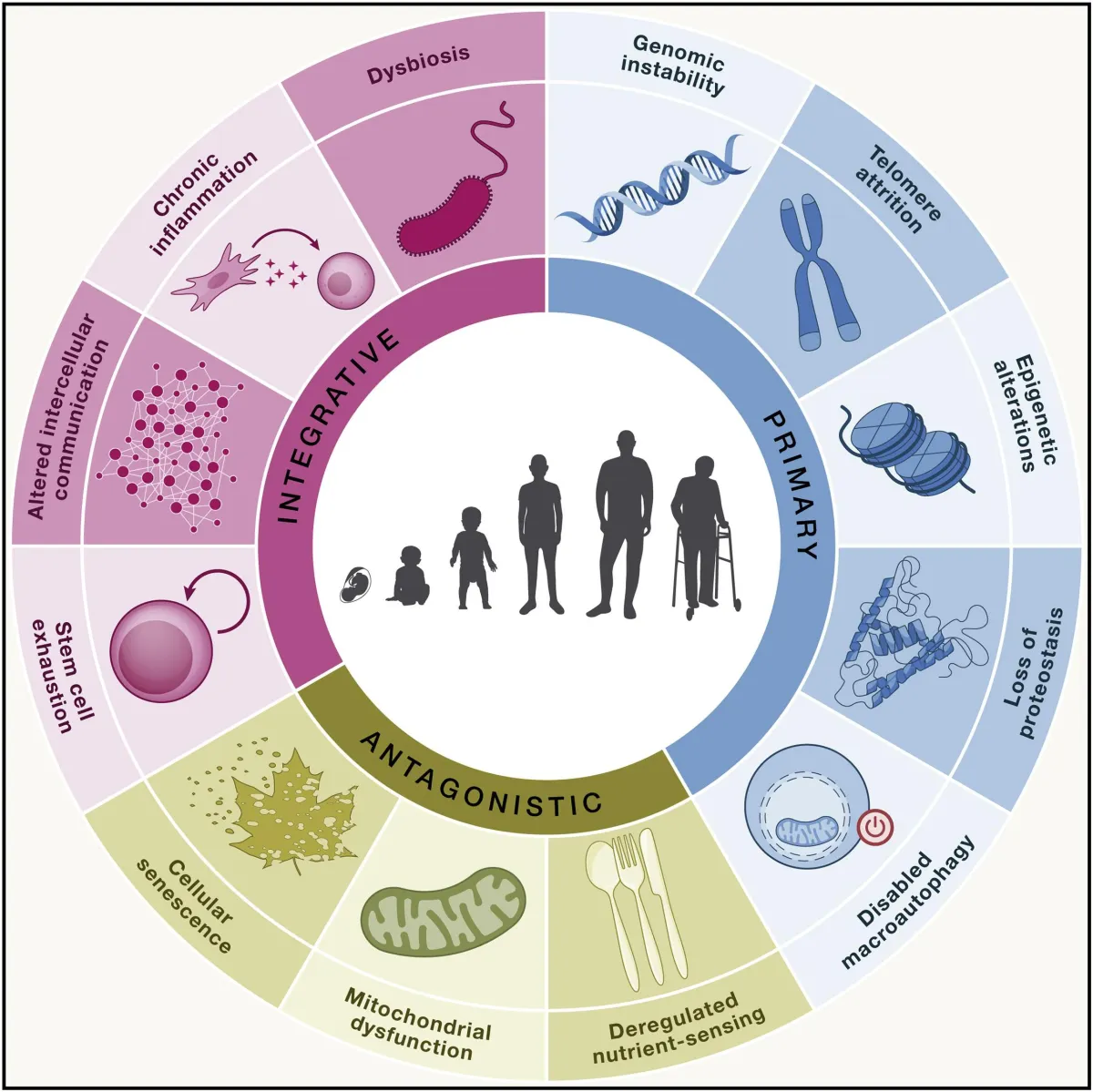
Many intrinsic cellular and tissue-level mechanisms are involved in the biological process of aging and, eventually, death. These mechanisms are complex and beyond the scope of this educational article. In simple terms, as we age, our cells gradually lose their ability to repair, regenerate, and renew themselves. Over time, this decline leads to functional impairment, producing the signs and symptoms we recognize as aging.
Researchers have identified approximately sixteen fundamental biological mechanisms of aging, collectively known as “The Hallmarks of Aging.”
Some of the most relevant hallmarks include:
1. Mitochondrial Decline (Quantity and Function)
This decline is partly caused by reduced mitochondrial renewal, a process known as mitophagy. Since mitochondria are the power plants of our cells, their dysfunction often manifests clinically as low energy levels, fatigue, and reduced muscular strength.
2. Chronic Inflammation
A slow, persistent, low-grade inflammatory state—sometimes called inflammaging—affects multiple organs, interferes with normal cellular function, and impairs tissue repair and regeneration.
3. Cellular and Tissue Hypoxia
This refers to the reduced ability of cells to receive or effectively utilize oxygen, which negatively impacts vitality, energy production, and regenerative capacity.
4. Cellular Senescence
Senescent cells—often referred to as “zombie cells”—are old, dysfunctional cells that fail to undergo normal programmed cell death (apoptosis). Instead, they remain alive and interfere with the function of healthy surrounding cells.
5. Toxic Accumulation
Over time, the body accumulates toxic substances such as environmental pollutants, heavy metals, and chemical residues. These compounds can disrupt cellular function and contribute to chronic disease and accelerated aging (examples include mercury, arsenic, glyphosate, and others).
6. Stem Cell Exhaustion
With aging, there is a gradual reduction in the number and function of pluripotent stem cells. This limits the body’s ability to repair tissues and regenerate organs, contributing to changes such as skin aging, reduced kidney function, and slower healing.
Many other aging mechanisms have been proposed, and most of them overlap and interact with one another, creating a complex biological network.
Interventions to Slow the Aging Process
Longevity Medicine focuses on strategies that can positively influence these hallmarks of aging, based on the most advanced research in gerontology and preventive medicine.
Hypocaloric Diet and Intermittent Fasting
Caloric restriction—either through intermittent fasting or sustained mild calorie reduction—is one of the most consistently studied longevity interventions in animal models, including mammals. It stimulates autophagy, a cellular self-cleaning and recycling process essential for cellular health.
Adequate and Restorative Sleep
Seven to eight hours of quality sleep per night, including both deep sleep and REM sleep, supports hormonal balance, regulates the circadian rhythm, and facilitates neurological waste clearance through a unique drainage system known as the glymphatic system.
Metformin
This widely used diabetes medication has demonstrated beneficial effects on mitochondrial function and cellular resilience by activating an energy-sensing enzyme called AMPK.
NAD⁺ (Nicotinamide Adenine Dinucleotide)
NAD⁺ is a critical intracellular molecule involved in energy production, DNA repair, and cellular signaling. Its levels decline with age, making replenishment an important strategy for supporting mitochondrial health and cellular function.
Glutathione
Known as the body’s “master antioxidant,” glutathione levels decrease with aging. Supplementation helps maintain antioxidant defenses and reduce oxidative stress.
Vitamin D
Vitamin D functions more like a hormone than a simple vitamin. It plays a regulatory role in numerous biological processes, supporting bone health, immune function, cardiovascular health, and brain function.
Resveratrol and Quercetin
Resveratrol is a natural polyphenol found in grapes, berries, and other plants. It supports mitochondrial function and cellular resilience. I often combine trans-resveratrol with quercetin, another flavonoid with anti-inflammatory and anti-aging properties.
Omega-3 Fatty Acids (Fish Oil)
Omega-3 fatty acids are potent anti-inflammatory agents that help counteract chronic inflammation associated with aging and support cardiovascular and brain health.
Rapamycin (Sirolimus)
Although controversial due to its immunosuppressive properties, when used cautiously under medical supervision, rapamycin may promote longevity by inhibiting the mTOR pathway, thereby stimulating autophagy.
Peptides
Certain therapeutic peptides have demonstrated potential anti-aging effects due to their regenerative properties, influence on muscle and tissue repair, and regulatory effects on hormones and cellular signaling.
Red Light and Near-Infrared Light Therapy
These therapies help reduce chronic inflammation, decrease oxidative stress, enhance mitochondrial efficiency, and improve cellular resilience to metabolic stress—key factors in the aging process.
Other Geroprotectors and Senolytics
Compounds such as fisetin, urolithin A, and EGCG are being studied for their roles in reducing senescent cells and supporting healthy aging.
Biological Therapies
Biological products such as PRP (platelet-rich plasma), exosomes, and stem cells may be used for skin rejuvenation, wound healing, joint repair, cartilage regeneration, and systemic support. These therapies are not FDA-approved for anti-aging indications and may be restricted or illegal in some states. Consultation with an experienced and properly licensed medical provider is essential.
Our Longevity Protocol: A Four-Stage Approach
In our clinic, we use a structured longevity protocol based on four main stages:
1. Review
A comprehensive clinical evaluation using advanced laboratory testing, imaging, and specialized technologies to assess overall health, calculate biological age, and personalize interventions.
2. Remove
Assessment of toxic burden followed by targeted detoxification strategies to eliminate harmful substances identified through blood and urine testing.
3. Reinforce
Optimization of all health domains, with particular focus on organs and systems most affected by accelerated biological aging. This is where personalized longevity therapies are implemented.
4. Regeneration
Focused interventions for areas showing signs of chronic damage—such as joints, skin, hair, and sexual health—to promote tissue regeneration, improve mobility, and enhance appearance. After all, to feel younger, you need to move well—and look better.
Regulatory & FDA Disclaimer
This content is for educational purposes only and does not replace professional medical advice. Some longevity therapies are not FDA-approved and may be used off-label under medical supervision.